

Goa has never been short on glamour—but the next wave of luxury is shaping up to be more deliberate, more design-led, and far more experience-driven than the “sun, sand, and season” formula of the past. In a move that underlines this shift, Hilton has announced the signing of Waldorf Astoria Goa, bringing one of the world’s most storied luxury hotel brands to the state. Scheduled to open in 2030, the property is planned as a 148-key beachfront resort on a 20-acre waterfront site in South Goa, with sweeping views of the Arabian Sea and a positioning that clearly aims beyond conventional resort luxury.
For Goa’s hospitality ecosystem, the significance isn’t only that a new luxury flag is arriving—it’s which flag, where, and how it intends to compete.
A legacy luxury name, reinterpreted for a leisure destination
Waldorf Astoria’s brand DNA has always leaned towards timeless elegance, grand social spaces, and service that feels quietly theatrical without being loud. Translating that legacy into a leisure-forward destination like Goa is a strategic statement: the market is no longer just about room nights and seasonality—it is about iconic positioning, high-yield experiential stays, and destination dining that can draw both resident guests and local patrons.
Hilton’s decision to place the brand in Goa also speaks to a larger national story: the rise of India’s premium leisure travel market, where celebrations, curated escapes, and private luxury experiences are driving demand for properties that can deliver “special occasion” energy year-round—not only in peak season.
The development partnership: local roots, luxury ambitions
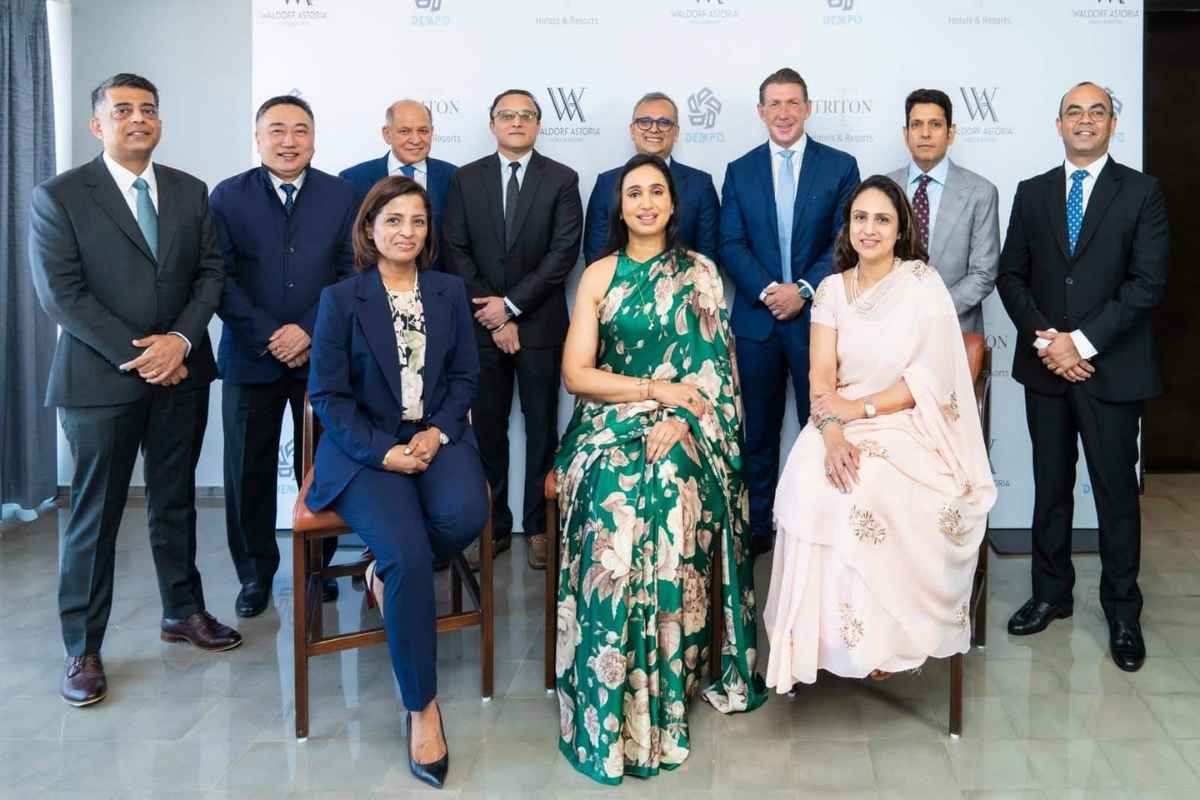
The project is being developed by West Coast Hotels Pvt. Ltd., a joint venture between the V.S. Dempo Group—one of Goa’s long-established business families—and Triton Hotels & Resorts Private Limited, a luxury hospitality developer with a track record across marquee Indian destinations. This pairing matters: it combines deep local familiarity with development capability designed for high-end projects, which is often the difference between a luxury signing that’s merely announced and one that’s actually delivered at the intended level.
148 keys, but not “standard” rooms: the product is meant to feel private
While 148 rooms might sound substantial, the intent is clearly to build a resort that feels spacious and privacy-forward, especially given the 20-acre footprint. The plan includes a mix of rooms, suites, and villas, which typically signals a guest strategy built around longer stays, premium families, intimate celebrations, and high-spend travellers who want both resort facilities and personal space.
In Goa, where luxury travel has increasingly tilted towards villas, private pools, and gated experiences, this approach positions the hotel directly in the “new luxury” lane—where the guest wants exclusivity and a brand-backed ecosystem of service, dining, and wellness.
The biggest story for a food & hospitality audience: the culinary architecture
For the Food & Hospitality industry, the most exciting part of the announcement is not the room count—it’s the F&B blueprint.
The signing indicates hallmark Waldorf Astoria elements, including:
- Peacock Alley: the brand’s signature social and culinary lounge concept—often a centerpiece for afternoon rituals, patisserie culture, and crafted beverage programs. In Goa, Peacock Alley could become a new kind of “luxury living room” that hosts everything from high tea to evening aperitifs, bridging tourists, residents, and the state’s social circuit.
- A curated collection of culinary experiences designed to feel layered rather than generic.
- A specialty beachfront restaurant, which is likely to be a major destination draw—especially if it leans into high-quality seafood, wood-fire techniques, and a modern Goan coastal narrative rather than predictable “beach shack luxury.”
- A rooftop bar, which signals a sunset-led, design-centric venue strategy—one that can build brand heat beyond in-house dining.
What this suggests is a property that understands Goa’s hospitality truth: a luxury hotel’s success here is deeply tied to whether it becomes a food, bar, and event destination, not just a stay option.
Events and celebrations: premium spaces are not an add-on anymore
Alongside dining, the hotel is planned to include premium event spaces, reinforcing that the future of resort luxury in India is tightly linked to celebrations—weddings, milestone events, curated corporate retreats, and brand off-sites.
Goa already competes strongly in the celebratory travel market, but luxury travellers increasingly expect event experiences that feel like curated productions: high-spec venues, intelligent lighting, acoustics that work, flexible layouts, and service choreography that can handle scale without losing finesse. Waldorf Astoria’s arrival will raise expectations and, in turn, push the local market to sharpen standards—especially across planning, catering, event design, and staffing.
Why South Goa—and why it matters
South Goa’s luxury market has a distinct personality: calmer coastline, more privacy, larger land parcels, and an audience that often prefers understated sophistication over loud tourism energy. A 20-acre waterfront site aligns with a long-term luxury strategy: build a resort that can deliver seclusion, nature, and a strong sense of place—without sacrificing high-end infrastructure.
This is important for the broader industry because it reinforces South Goa as a premium growth corridor for branded luxury resorts that are built for international benchmarks, not just domestic expectations.
The competitive ripple: standards, staffing, and the premium guest mindset
A global luxury brand doesn’t just add inventory—it reshapes the playing field. The ripple effects are likely to be felt across:
- Talent and training: Luxury properties elevate competition for skilled chefs, mixologists, butlers, guest relations professionals, and department leaders. This typically pushes the ecosystem toward better training, stronger SOPs, and higher salary benchmarks.
- Supply chain quality: Premium brands demand consistency in everything—from seafood traceability and artisanal bakery inputs to wellness products and room amenities. That pressure often upgrades local supply networks.
- Design and experience expectations: The modern luxury guest is evaluating storytelling, interiors, scent, sound, and micro-moments. Properties that can’t compete on experience design will find it harder to justify premium pricing.
A 2030 opening—but the signal is immediate
Even with an opening date set years ahead, the announcement is already meaningful. It tells the market that luxury growth in Goa is entering a new phase—one that blends branded prestige with destination-led experiences.
For Goa’s food and hospitality community, the opportunity is equally clear: the future belongs to businesses that can align with this premium direction—whether through culinary collaborations, artisanal supply partnerships, experience curation, staffing solutions, or event ecosystem services.
By the time Waldorf Astoria Goa opens its doors in 2030, the winners won’t be the ones who merely watched the luxury wave arrive—they’ll be the ones who prepared early, upgraded standards, and built offerings worthy of the new guest Goa is actively attracting.